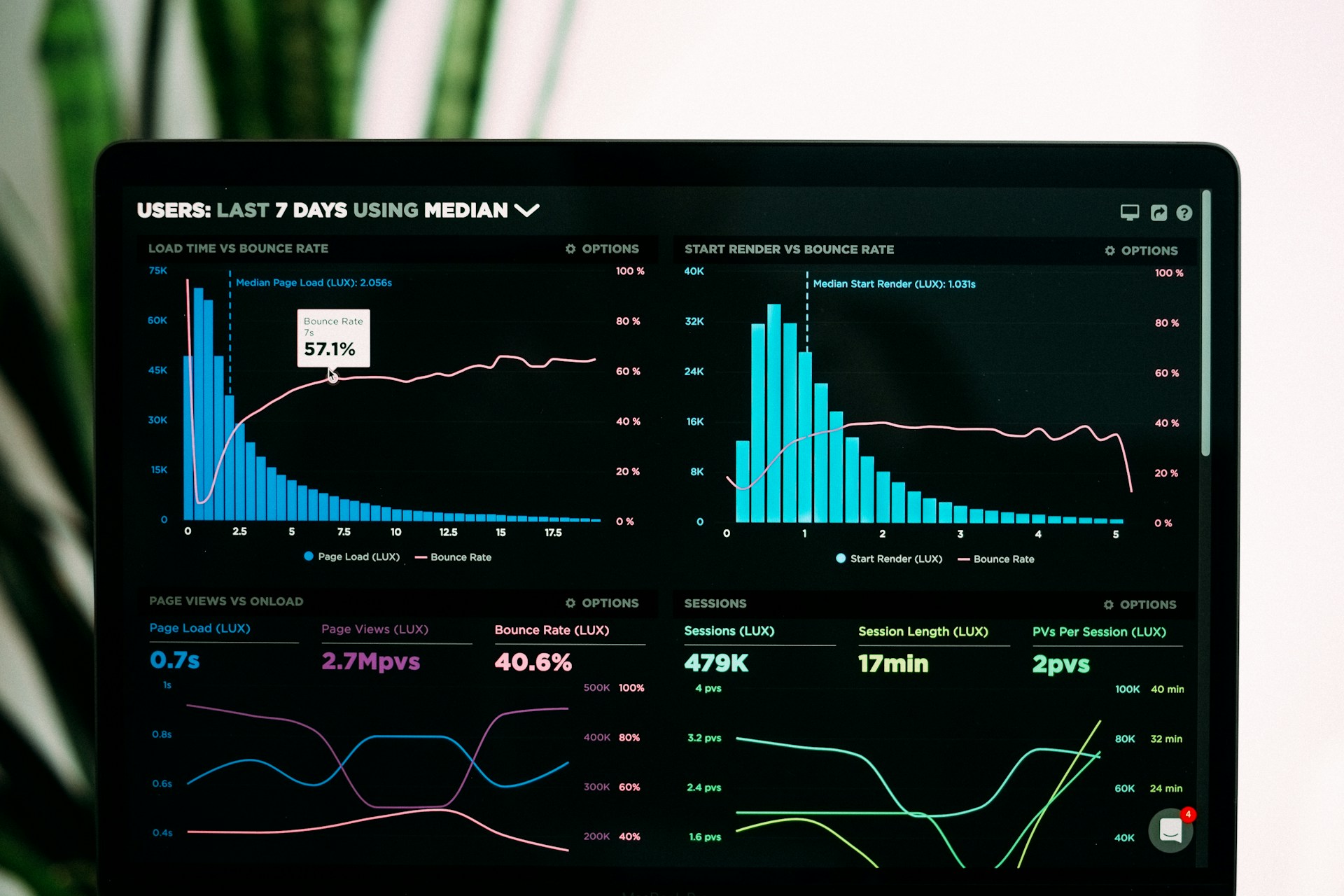

Data is important because it provides evidence for decisions. It helps people and organisations understand what is happening, measure results, spot problems and decide what to do next. In business, that can mean improving customer service, reducing waste or checking whether a marketing campaign produces worthwhile enquiries.
Its value depends on relevance, accuracy and interpretation. Collecting more records does not automatically produce better decisions: a small, reliable dataset that answers a specific question can be more useful than a large collection with gaps or duplicates.
For example, a marketing team can compare campaign costs with qualified enquiries and sales outcomes. This connects activity to results and helps the team decide which campaigns deserve further investment. The figures need consistent definitions and a shared reporting period to support a fair comparison.
This guide explains the main ways data supports business and public services, the formats it takes, and the checks that make it useful.
What Is Data?
Data is just information gathered, collected, and then processed to get desired outcomes. It could be numbers, text, pictures, videos, or any other kind of information.
Two common formats are structured and unstructured data. A third, semi-structured data, uses labels or tags without requiring every record to fit the same table. JSON and XML are examples; see IBM’s explanation of data formats.
1. Structured Data
This type of data is organised and hence easy to store in databases. It includes:
Names and addresses in a customer database
Sales records in a spreadsheet
Product details in an online store
2. Unstructured Data
This data is not arranged in a particular order. It contains:
Social media posts
Emails and text messages
Images, videos, and audio files
Both kinds of data are very important for business and everyday life.
Importance of Data in Various Fields
Data is essential in nearly every field. Let’s find out how different fields use data to enhance efficiency, decision-making, and innovation.
1. Business and Marketing
Improved Decision Making
Companies rely on data to understand customer behaviour, market trends, and sales performance. Using the right data will allow businesses to make the right decisions instead of relying on guesswork.
Personalized Customer Experiences
Do you know how online stores always recommend products based on your previous purchases? That is data in action! Businesses use customer data to offer personalized recommendations that enhance the shopping experience.
Improved Marketing Strategies
Marketing professionals utilize statistics to identify the target audience, measure campaign performance, and then make necessary adjustments for optimal success. Utilizing Google Analytics, companies can monitor their website traffic, customer demographics, and buying patterns.
2. Healthcare
Improved Diagnosis and Treatment
The doctor relies on patient information to diagnose diseases and give medication prescriptions. Patient records, laboratory tests, and genetic information are consulted to build customized healthcare programs.
Monitoring Outbreaks of Diseases
Data has enabled the monitoring and control of outbreaks among both governments and health organizations. It has helped trace the development and growth of COVID-19 in monitoring cases, predicting surges, and designing vaccines during the pandemic.
3. Finance and Banking
Fraud Detection
Banks detect fraud with data analytics by detecting any abnormal transactions to curb the crimes. In case of a sudden withdrawal from your account, your bank might flag such a transaction or seek confirmation.
Investors analyze market trends and company data to make smart investment decisions. Real-time data helps traders buy and sell stocks at the right time.
4. Education
Personalized Learning
Educational platforms use data to customize learning experiences. For example, online courses track student progress and recommend lessons based on performance.
Better School Management
Schools and universities use data to monitor student attendance, performance, and resource allocation, ensuring a better learning environment.
5. Government and Public Services
Smart City Development
Governments utilize data to improve public transportation, manage traffic, and optimize waste management. Smart city projects are based on data to improve urban living.
Policy Making
Data helps governments in making informed policies on healthcare, education, and the economy. Census data is used for planning infrastructure and allocating resources.
How Businesses Benefit from Data
Businesses that utilize data properly have a competitive advantage. Here’s how:
1. Data-Driven Decision Making
Companies analyze data to understand market trends and customer needs. This helps them make strategic decisions, such as launching new products or expanding to new markets.
2. Operational Efficiency
By tracking employee productivity, supply chain efficiency, and sales performance, businesses can identify areas for improvement and cut unnecessary costs.
3. Enhanced Customer Satisfaction
Data allows companies to provide better service to customers. Data analysis using customer feedback, for example, will allow it to give relevant services and make issue resolution very swift.
4. Competitive Edge
Companies managing data well avoid competition. By anticipating market conditions, discovering more opportunities, or coming up with innovation faster, a company overtakes its opponents.
Challenges in Data Handling
Data itself is valuable. Managing it gives one some obstacles, however, some of these include:
1. Data security and privacy
Where the risk of cyber threats looms, data that requires protection, businesses must implement proper and rigid data protection measures.
2. Data Overload
Businesses produce humongous data daily. Its proper management and analysis can mitigate data overload only through refined instruments and trained professionals.
3. Maintaining Data Validity
Inaccurate and obsolete data trigger weak decision-making. Organizations need to clean their database frequently and update it regularly to ensure validity.
4. Compliance with Legal Rules
Laws such as the General Data Protection Regulation (GDPR) and the California Consumer Privacy Act (CCPA) require businesses to handle customer data responsibly. Non-compliance can result in heavy fines.

The Future of Data
The importance of data will only grow in the coming years. Here are some key trends shaping the future of data:
1. Artificial Intelligence (AI) and Machine Learning
AI-powered data analysis will become more technologically advanced to realize business value through this method faster and automate most decision-making.
2. Blockchain for Data Security
Blockchain can provide a shared record designed to make changes detectable, but it does not make every dataset accurate or prevent all unauthorised access. Organisations still need appropriate permissions, secure systems and checks on the information entered.
3. Big Data and Cloud Computing
Big data, based on cloud computing, will continue the journey in scalably storing solutions both for business and individuals.
4. Data-Driven Personalization
From e-commerce to healthcare, data will be even more able to power personal experiences.
Conclusion
Data is one of the most precious assets in the current world. Data powers businesses enhances a customer experience, and boosts the progress of technologies. Whether it is healthcare, finance, marketing, or government, data is extremely linked with decision-making and innovation.
But with all this power, comes the added responsibility of dealing with the business and personal consequences of collecting massive amounts of data.
With proper data security, privacy, and ethical usage in mind, this growth will prove to be for the good, leading to a better outcome for smarter businesses and a more connected world.
How to put data to work
Start with a decision: identify the question you need to answer, such as which campaign generates the most qualified enquiries. Choose a measure that reflects the outcome rather than activity alone.
Check the inputs: remove duplicate records, agree definitions, check missing values and compare equivalent time periods. Record limitations so a dashboard does not imply more certainty than the data supports.
Act and review: decide who will use the result, make a measured change and compare the outcome with your starting point. Our guide to software types and uses explains the tools that can help teams collect, process and analyse data.